


Mariano Fortuny, Stories
The Reticule: From the 18th Century to modern day Fortuny

What’s a reticule?

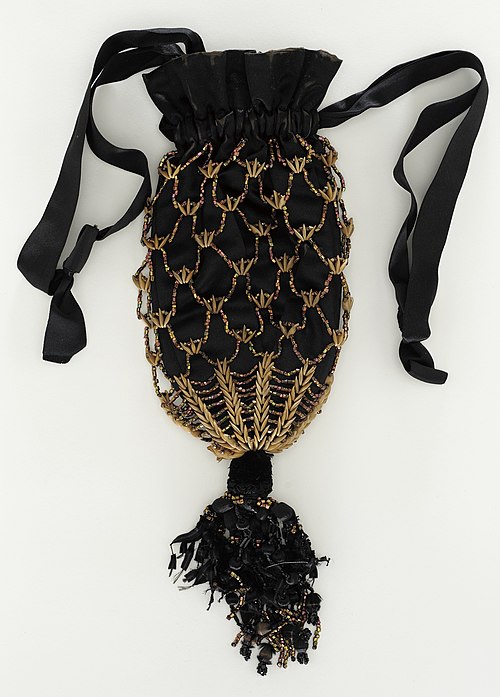
The reticule, sometimes spelled réticule, was the first true handbag. According to the Centre National de Ressources Textuelles at Lexicales, it was a “small handbag or purse, once made of fine mesh, which was very fashionable under the Directoire and the Restoration.” The term comes from the Latin reticulum, meaning “small net” or “mesh,” recalling its delicate origins.
« Je vous ai déjà dit que les femmes avaient repris l’usage des sacs à ouvrage que les antiquaires appellent réticules, attendu que ceux des dames romaines étaient formés en filet de réseau ; mais les bourgeoises qui les portent disent toujours des ridicules » — Decourchamp, Souvenirs de la marquise de Créquy, t. IX, ch. V.
“I have already told you that women have returned to the use of work bags which antiquarians call réticules, since those of Roman ladies were made of netting; but the bourgeois women who carry them still call them ridicules.”
From pockets to reticules
Before the appearance of the reticule, women wore pockets tied around their waists, hidden under layers of petticoats. The side seams of their gowns were left open so that they could reach through the fabric to retrieve small personal items.
At the turn of the 19th century, with the rise of the high-waisted, slender silhouettes of Regency fashion, these hidden pockets disappeared. There was no longer space to conceal them. Women began carrying their essentials (a handkerchief, coins, a mirror, perhaps even a love letter) in small drawstring bags worn on the wrist. These were the reticules: the ancestors of the modern handbag.
Making of a fashion
Originally crafted from netting, reticules soon appeared in silk, satin, and velvet, often decorated with embroidery or beading. Some matched the wearer’s gown, while others displayed elaborate craftsmanship. Most closed with a drawstring, though later designs introduced small clasps. Many women made their own, turning this practical accessory into an expression of individuality and taste.
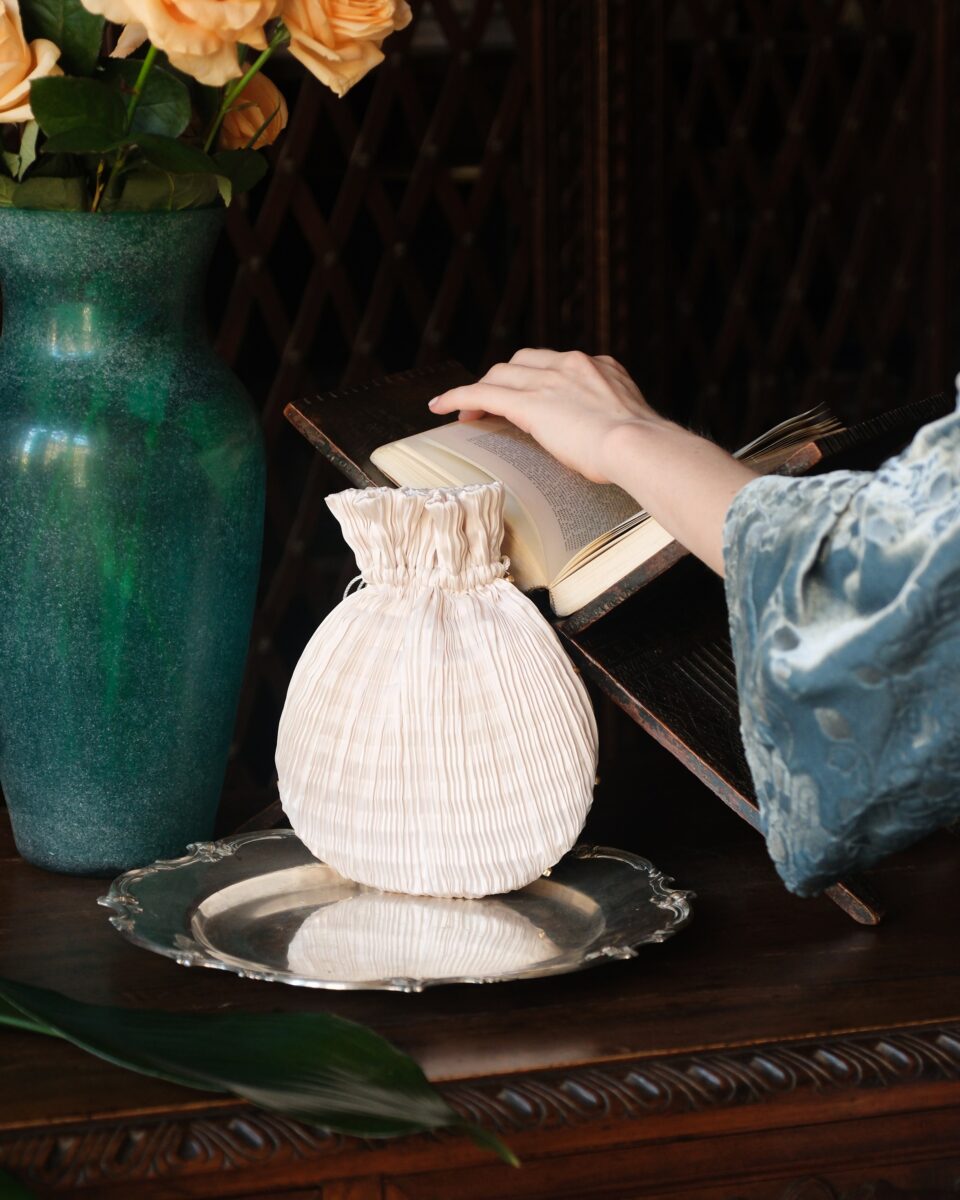
Today, some of the finest examples of these early handbags can be admired in museums such as the Victoria and Albert Museum in London or The Metropolitan Museum of Art in New York.
Fortuny continues the tradition
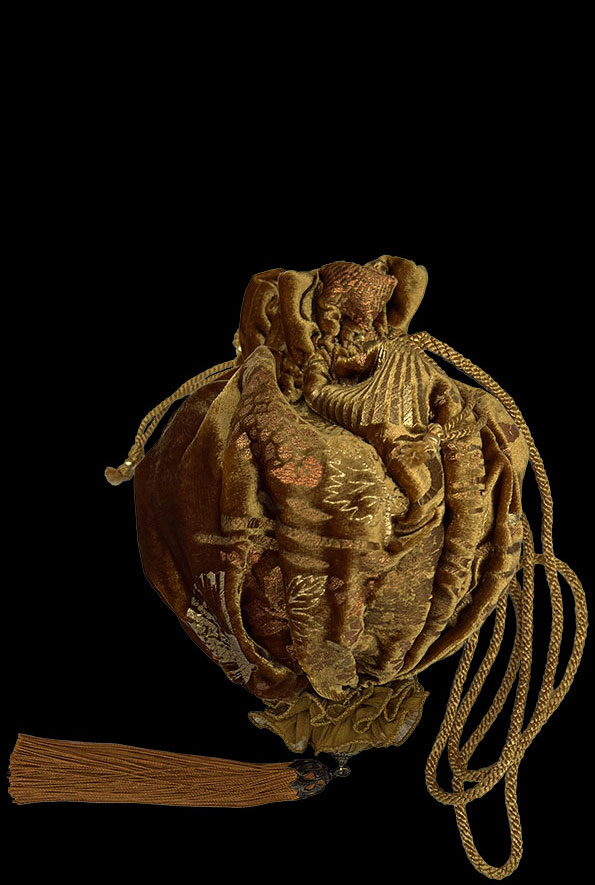
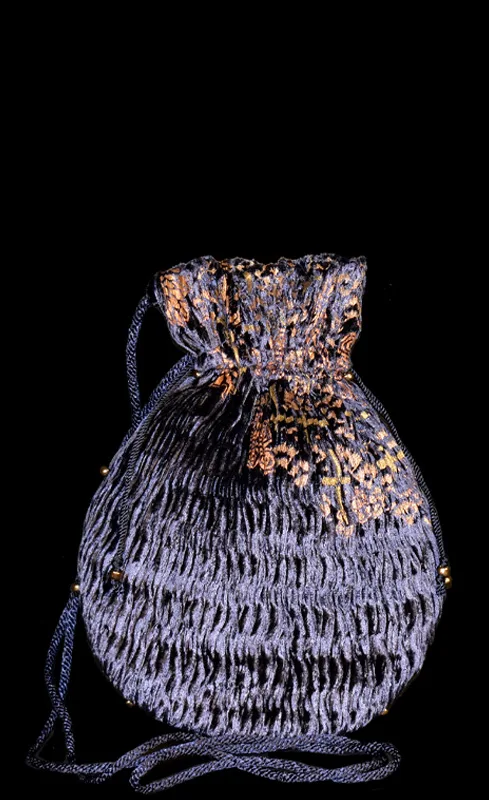
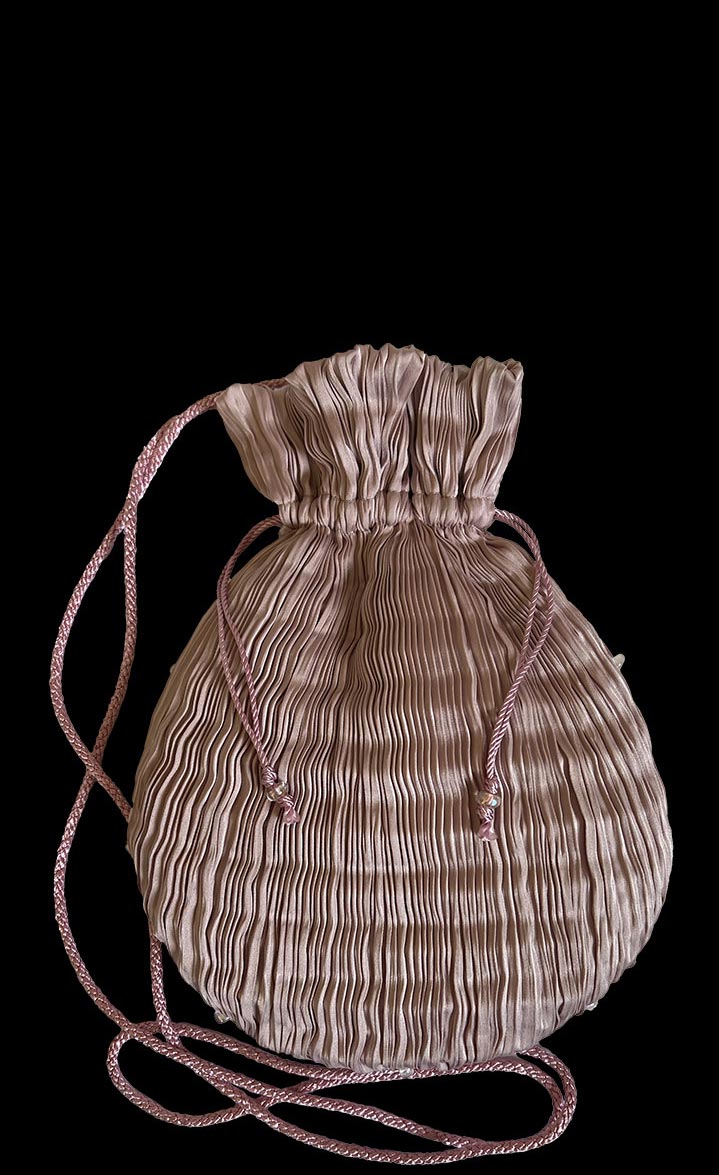
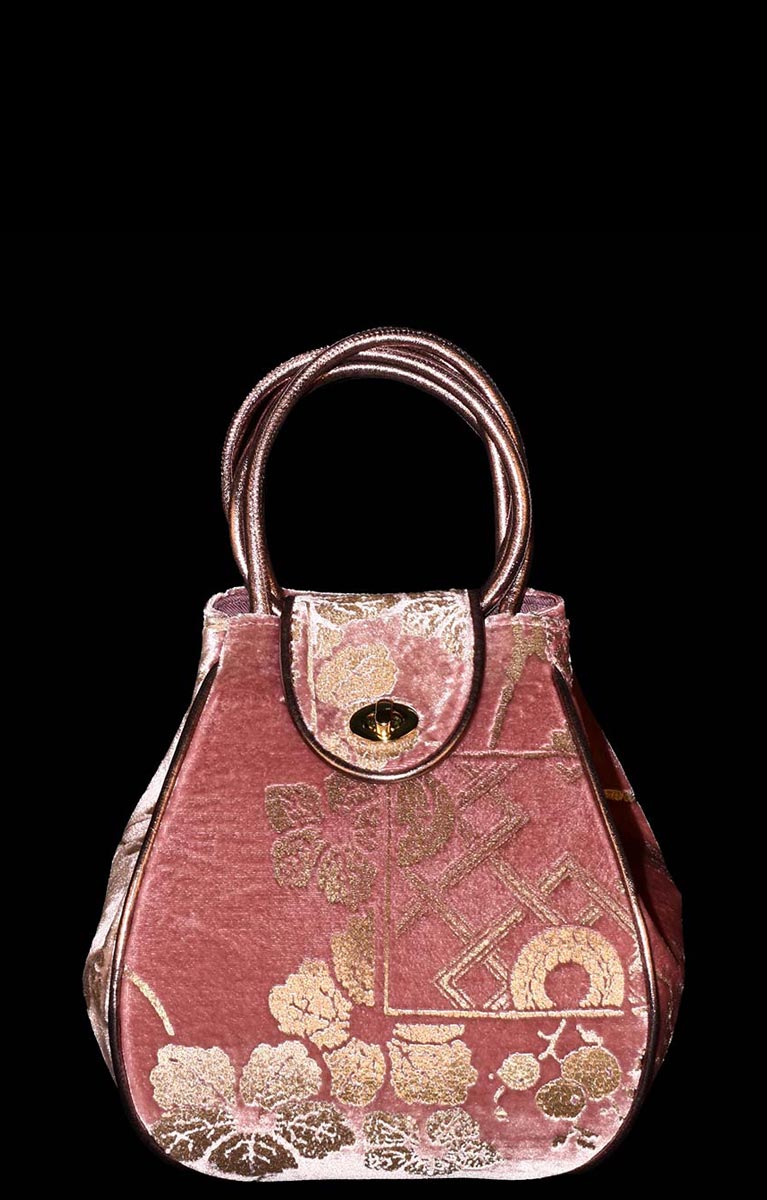
With its refined handbags such as the Athena, the Praline, or the Anthea, Fortuny continues the story of the reticule, celebrating the same delicacy, craftsmanship, and sense of timeless elegance. Each bag is made from hand-printed velvets or using the plissé technique, both emblematic of Fortuny’s artisanal heritage.
Honouring the legacy of those early handcrafted reticules, Fortuny upholds the same devotion to material and technique. From hand-printed velvets to pleated silk, we create handbags that embody both tradition and modern grace.

Sources
CNRTL, Réticule (definition)
Victoria and Albert Museum, London
Los Angeles County Museum of Art
Glanmore National Historic Site, Don’t Ridicule My Reticule exhibit
Decourchamp, Souvenirs de la marquise de Créquy de 1710 à 1803

 English GBP
 Italiano
 Français
 Deutsch
 Español
 简体中文
简体中文 Русский